



Energy Efficiency of Nitrogen Fixation by
SAP-Dual-Plasma Activated Water System

Abstract
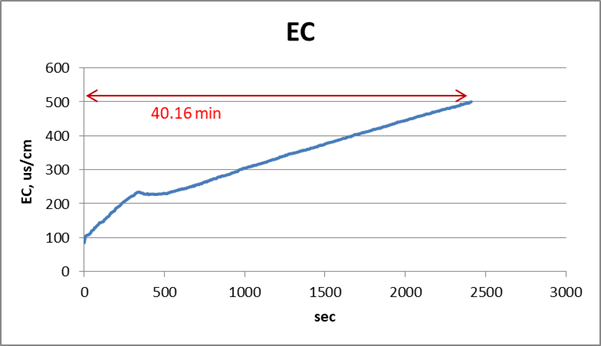
This study evaluates the nitrogen fixation efficiency of a dual atmospheric plasma system producing plasma-activated water (PAW) at an electrical conductivity (EC) of 500 µS/cm. Reverse osmosis (RO) water (initial EC < 100 µS/cm) was treated by plasma discharge for 40.16 minutes to reach EC 500 µS/cm. The electrical power input was 1.1 kW, resulting in a total batch energy consumption of 0.736 kWh.
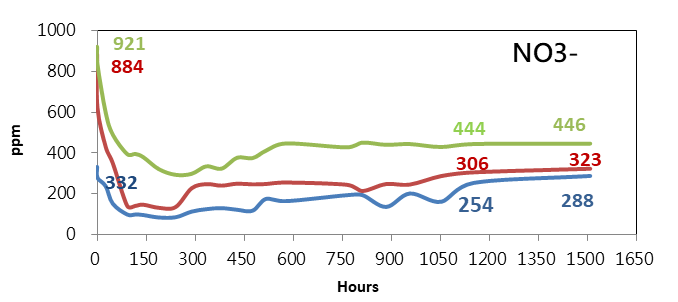
Immediately after plasma activation, nitrate concentration reached 884 mg/L, corresponding to a nitrogen fixation efficiency of 0.91 kWh/mol-N. After long-term stabilization (1500 h), nitrate concentration stabilized at 323 mg/L, corresponding to an effective energy efficiency of 2.49 kWh/mol-N. The stabilized value represents the practical usable nitrogen fixation efficiency of the system.
Introduction
Plasma-activated water (PAW) has emerged as a sustainable approach for atmospheric nitrogen fixation under ambient conditions. Unlike the Haber–Bosch process, plasma systems operate at room temperature and atmospheric pressure, offering decentralized nitrogen production potential.
This study quantifies the nitrogen production rate and energy efficiency of the Shermann dual-plasma PAW system under EC-controlled operation.
2. Materials and Methods
2.1 Plasma System Operation
A dual SAP-plasma excitation system was used to treat RO water
Operational parameters:
- Feed water: Reverse osmosis (RO) water
- Initial EC: < 100 µS/cm
- Target EC: 500 µS/cm
- Plasma excitation time: 40.16 minutes (0.669 h)
- Electrical power input: 1.1 kW (excluding compressed air energy)
- Production rate at EC 500: 84.5 L/h
2.2 Energy Consumption
Total electrical energy per batch:
Energy=Power × Time
=1.1 kW × 0.669 h =0.736 kWh
2.3 Production Capacity
Including water filling and discharge time:
Production capacity = 84.5 L/h @EC500
Single batch water volume:=56.5L
2.4 Nitrate Analysis
Nitrate concentrations were measured at three EC conditions (300, 500, and 800 µS/cm). Immediate and long-term (up to 1500 h) nitrate stability were recorded.
3. Results
3.1 Immediate Nitrate Concentration
At EC 500 µS/cm:
NO₃⁻ = 884 mg/L
Total nitrate mass per batch:
884 mg/L × 56.5 L = 49.9 g NO₃⁻
Conversion to Nitrogen (NO₃⁻-N) mass

Moles of nitrogen:

Energy Efficiency

3.2 Long-Term Stabilized State (1500 hr)
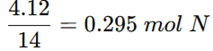
NO₃⁻ = 323 mg/L
Total nitrate mass:

Nitrate mass:

Moles of nitrogen
Energy efficiency:

4. Discussion
|
Condition |
mol N |
Energy (kWh) |
kWh/mol-N |
|
Immediate (884 ppm) |
0.806 |
0.736 |
0.91 |
|
Stabilized (323 ppm) |
0.295 |
0.736 |
2.49 |
The immediate value reflects peak plasma fixation yield, while the stabilized value represents practical nitrogen retention after reactive species equilibration.
Compared to conventional ammonia synthesis (~8–12 kWh/kg NH₃), the plasma system demonstrates competitive decentralized nitrogen fixation potential under ambient conditions.
- Conclusion
The SAP-dual-plasma system achieves:
- Peak nitrogen fixation efficiency: 0.91 kWh/mol-N
- Stabilized practical efficiency: 2.49 kWh/mol-N
- Single modular production capacity: 84.5 L/h @ EC 500 µS/cm
The stabilized value should be considered the realistic engineering efficiency for agricultural or industrial deployment.
This modular system can be expanded indefinitely to accommodate large-scale agricultural and industrial applications.